
Home > Shop > Electronic > Lab Equipment > 9100A High-Voltage Amplifiers
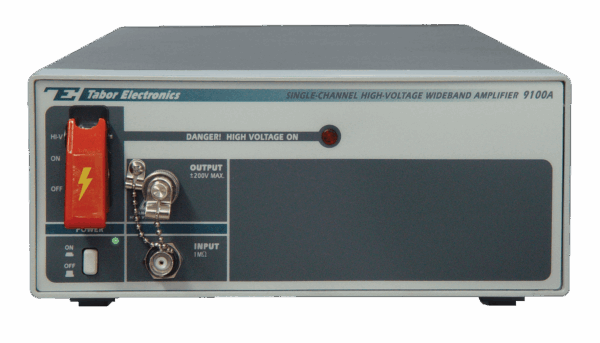
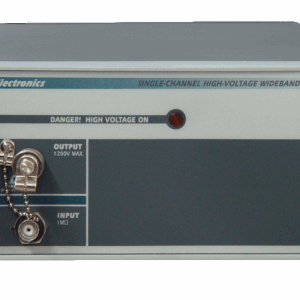
00Vp-p Single-Channel Signal Amplifier
Model 9100A was designed as a general purpose, wide band and high voltage amplifier however, with specific applications in mind. It is built in a small case size to save space and cost but without compromising bandwidth and signal integrity.

9100A High-Voltage Amplifiers
We are GST registered in New Zealand and we charge in New Zealand Dollars. Foreign-based customers please email us or call our Australian or New Zealand numbers below and we can manually process the sale without New Zealand GST. For Australian customers we can also invoice in AUD and you can pay into our Australian bank account to minimise bank fees and complexities.
Please note that you may be assessed for your countries duties and taxes on import as per your local regulations.
- Description
- Frequently Asked Questions
Description
- Single channel
- High voltage output to 400Vp-p (±200V)
- Output current to 125 mA
- Full power bandwidth from DC to >500kHz
- Slew rate to 400V/µs
- Monitor Output
- Precise signal amplification for multiple applications
- Compatible with any of the Tabor waveform generators
What is the maximum output voltage of the Tabor 9100A high-voltage amplifier?
The 9100A is rated to 400 Vp-p output, which is plus or minus 200 V, at up to 125 mA. It takes the low-level signal from a waveform generator and scales it to whatever the test load actually requires, without reshaping the waveform in the process.
Standard instrument outputs top out around 1 to 5 V, which is not enough to drive piezoelectric actuators, MEMS devices, or electrostatic transducers at meaningful signal levels. The 9100A is available through Electrotest’s lab equipment range alongside bench and rack instruments for R&D and characterisation work.
What bandwidth and slew rate does the Tabor 9100A high-voltage amplifier provide?
Bandwidth runs from DC to above 500 kHz at full power, with a slew rate of 400 V per microsecond. Fast signals come through cleanly at full output voltage, which is not always a given at this voltage level.
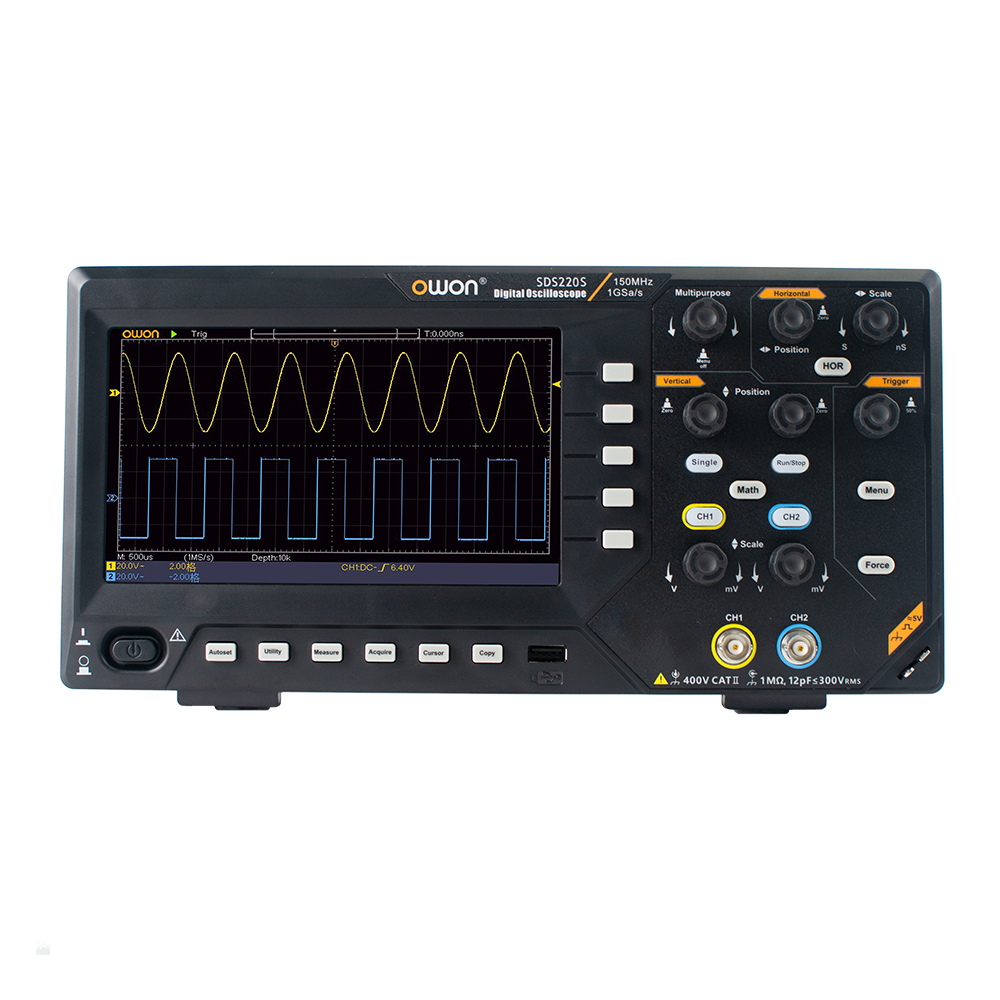
The DC coupling matters when the signal has an offset component, which is common in piezoelectric and electrochemical testing. Engineers who want to verify the amplified waveform on an oscilloscope can find compatible models in Electrotest’s Electronic category.
Which waveform generators is the Tabor 9100A compatible with?
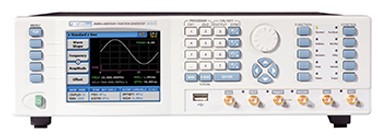
The 9100A works with all Tabor waveform generators, including the Proteus series and the WX series. Because they are designed together, gain, impedance, and signal integrity across the chain are predictable without extra cabling or adapters.
For labs putting together a complete Tabor system, the full Tabor product range at Electrotest covers waveform generators, digitisers, and amplifiers in one place.
What does the monitor output on the Tabor 9100A do, and why does it matter?
The monitor output is a scaled-down version of the high-voltage output on a standard BNC connector. Plug it into an oscilloscope and you can watch exactly what the amplifier is producing, without putting dangerous voltage across your measurement equipment.
Checking a high-voltage waveform otherwise means sourcing a differential probe rated for that voltage or wiring up a passive divider. Skipping that step saves time, and it matters most when building or troubleshooting production test equipment where time spent reconfiguring the rig is time lost.
What applications is the Tabor 9100A high-voltage amplifier designed for?
The 9100A was designed primarily for piezoelectric and ultrasonic work, along with electrostatic actuator control and materials characterisation. The case is compact enough for a bench without giving up bandwidth.
The 125 mA current output and DC coupling also make it usable with thin-film sensors and MEMS structures where charge-based actuation is needed. Institutions using it for physics or materials research will find it listed under Electrotest’s science and engineering testing instruments category.