

Home > Telecommunications > Spectrum Analysers
Spectrum Analysers
Discover Our Range of Spectrum Analysers

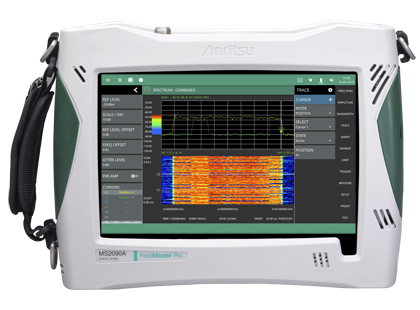


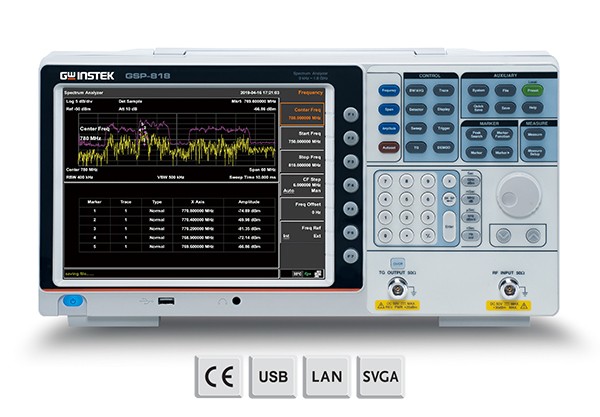


Spectrum Analysers – Precision Tools for RF and Telecommunications
At Electrotest, we provide high-quality spectrum analysers for engineers, technicians, and professionals across New Zealand. Spectrum analysers are essential instruments for monitoring and analysing radio frequency (RF) signals, ensuring accurate performance assessment of electronic and telecommunications systems.
Whether you need a portable analyser for field troubleshooting or a desktop unit for lab and production testing, our comprehensive range meets the demands of any application. Explore our products or contact our team for expert guidance tailored to your needs.
What is a Spectrum Analyser?
A spectrum analyser is a device that measures the magnitude of an input signal versus frequency across a specified range. Unlike an oscilloscope, which displays amplitude over time, a spectrum analyser displays signal amplitude over frequency, providing crucial insight into signal behaviour, interference, and performance.
In telecommunications and electronics, spectrum analysers are used for:
- Telecommunications: Evaluating the performance of wireless networks and RF components.
- RF and Microwave Engineering: Designing, testing, and troubleshooting RF circuits and devices.
- Production Testing: Ensuring electronic devices meet performance and quality standards.
- Field Service: Detecting and resolving network issues on-site.
Electrotest offers a full selection of spectrum analysers, including portable units for field work and high-performance desktop instruments for lab and production environments, ensuring professionals have reliable tools for accurate measurements.
How to Choose a Spectrum Analyser
Selecting the right spectrum analyser depends on several key factors:
Frequency Range
Choose an analyser that covers the full range of frequencies you intend to measure. Wi-Fi, RF, and microwave signals all require different ranges.
Resolution Bandwidth (RBW)
RBW determines the ability to distinguish closely spaced signals. Narrower RBW improves frequency resolution, helping you identify small differences between signals.
Dynamic Range
A wide dynamic range allows measurement of both strong and weak signals simultaneously, which is critical for accurate signal analysis.
Phase Noise
Lower phase noise ensures the analyser’s oscillator is stable, improving accuracy for high-frequency measurements.
Portable vs. Desktop
- Portable Spectrum Analysers are lightweight, battery-powered, and ideal for field troubleshooting, interference hunting, and network installation.
- Desktop Spectrum Analysers offer higher performance, more features, and wider frequency ranges, ideal for lab and production environments.
Budget Considerations
Spectrum analysers range from a few thousand dollars to tens of thousands. Balance performance requirements with budget constraints. Electrotest offers financing options to make professional-grade analysers accessible.
Why Choose Electrotest?
Local NZ Expertise
As a New Zealand-owned company, we understand the local telecommunications and electronics industry, providing personalised advice for your measurement needs.
Comprehensive Support & Service
We offer training, calibration, support and service, and after-sales support to ensure your spectrum analyser delivers accurate, reliable results.
Wide Product Range
From portable to desktop models, we stock spectrum analysers from leading brands to suit any application.
Expert Guidance & Training
Our engineers help you select the right analyser, and our courses keep your team up-to-date with the latest RF testing techniques.
Flexible Financing
Finance options are available to make acquiring high-quality instruments easier.
Frequently Asked Questions
It comes down to time versus frequency, really, since an oscilloscope shows how a signal changes over time, giving you that familiar waveform tracking across the screen, whereas a spectrum analyser breaks a signal down into its individual frequency components, showing which frequencies are present and how strong each one is.
If you’re after waveform shape, timing, or voltage behaviour, the scope is your instrument; if you’re chasing interference, checking RF emissions, or working with wireless signals, check out our range of spectrum analysers. Most serious test benches around New Zealand end up needing both, since they’re answering quite different questions rather than competing for the same job.
There’s a genuine sweet spot between the bargain-bin listings and the top-tier lab gear, and it pays to know what you’re looking for before buying on price alone.
Cheaper analysers can cut corners on noise floor, frequency stability, or overall build quality, which tends to show up the moment you’re trying to measure something subtle, so it’s worth checking those specs rather than judging on price or frequency range alone. Buying through a local NZ supplier like us also means there’s someone to call if you need a hand setting it up or get stuck on a reading, rather than taking a punt on an overseas listing with no support behind it; that’s the sort of thing our team is happy to help with.
Audio testing has its own priorities, so the specs worth focusing on shift a little compared to general RF work; you’ll want a low noise floor and good dynamic range to pick up subtle distortion or hum, decent resolution down in the lower kHz range where most audio content sits, and ideally built-in FFT analysis alongside THD and signal-to-noise measurement.
Frequency range matters less here than it does for RF applications, since human hearing tops out around 20kHz, but accuracy and resolution in that band matter a great deal. For anything more involved, it’s worth talking through your setup with our team so we can match the analyser to what you’re actually measuring, rather than just picking the biggest range on the spec sheet.
Spectrum analysers turn up across a surprising range of industries once you start looking, from telecommunications and broadcast engineering through to defence, automotive, and product compliance testing. Common applications include checking Wi-Fi and cellular signal quality, tracking down sources of RF interference, verifying that a new product meets EMC and EMI standards before it goes to market, and monitoring signal strength across radio and TV transmission networks. Wherever a signal is travelling through the air or down a cable, a spectrum analyser can help confirm it’s behaving the way it should.
If you are new to the job, you may find our selection of Electrotes Courses beneficial towards improving your working knowledge.
Getting started is less daunting than the front panel might suggest; the basics come down to setting your centre frequency and span so you’re viewing the right slice of spectrum, adjusting your reference level so the signal sits comfortably on screen without clipping, and dialling in resolution bandwidth to balance detail against sweep speed.
From there, most of the learning happens through hands-on practice rather than working through the manual cover to cover, which is why so many engineers pick things up faster after a bit of structured training rather than trial and error alone. If you’ve picked up new equipment and want a hand getting comfortable with it, Electrotest offers training and technical support alongside the equipment itself, so you’re never left figuring it out on your own.
A well-equipped RF or electronics lab tends to lean on a handful of core instruments working together, rather than any single hero device; a spectrum analyser for frequency-domain and interference work, an oscilloscope for time-domain signals, a signal or function generator to create test signals on demand, a bench power supply, and a reliable multimeter for basic electrical checks form the backbone of most setups.
Cable and antenna analysers, power meters, and calibration kits round things out depending on your specialisation. Think of the spectrum analyser as one essential piece of a broader toolkit rather than a stand-alone purchase, and it’s worth building that toolkit out with a supplier who can advise on how the pieces work together.
This comes down entirely to what you’re testing; Wi-Fi work typically means covering 2.4GHz and 5GHz bands, cellular and telecom testing often needs to range well up into the GHz territory depending on the network generation, while general RF or amateur radio use might only need coverage up to a few hundred MHz.
The safest approach is to map out every signal type you expect to test, both now and over the next few years, then choose an analyser with enough headroom to cover it comfortably rather than buying to your current need and outgrowing it within a year. If you’re not sure where your requirements sit, it’s worth a quick chat with our team before committing to a model.