Description
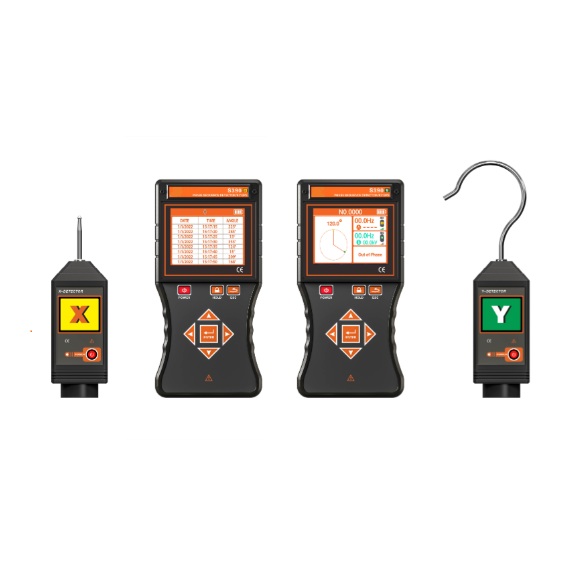
S390 Remote GPS High Voltage Phase Tester (a.k.a phase comparator) is a battery-operated instrument designed to detect the rotary field of three-phase systems and determine phase sequence. Unlike other regular phase sequence detectors, the satellite function of the instrument makes it not limited by distance, the distance between the X and Y transmitter and its respective receiver can be more than 500km apart and yet still obtain an accurate result. The time variation between the two receivers will be less than 30 nanoseconds. The receivers use a 3.5-inch true color LCD screen, supports a variety of satellite systems such as China’s BDS (Beidou Satellite Navigation System), the United States’ GPS, Russia’s GLONASS, the European Union’s GALILEO, and Japan’s QZSS and satellite augmentation system SBAS (WAAS, EGNOS, GAGAN, MSAS), includes 32 tracking channels, is able to receive GNSS signals from six satellite timing systems at the same time, and it will synchronize the timing with the instrument to ensure accuracy of phase detection. Another feature of the instrument is that it does not require an ongoing connection with the satellites to obtain an accurate result. Once the satellites connection has been established, it can be in sync with the satellites’ time for at least 30 minutes, making it convenient for comparing phases in environments with no signal. In addition, it can use both the contact testing method or the non-contact method for phase detection of high voltage cables, which can be a much safer option for users.